Certifications and Compliance Standards Met by AMT in Injection Molding

AMT Singapore: High-Precision Plastic Injection Molding.

A tiny medical component can demand extreme accuracy while still being mass-produced—did you know? That level of detail is essential across medical, automotive, and electronics applications. These industries seek dependable Singapore partners.

With roots in 1990, AMT brings over three decades of partnership to manufacturers. They combine precision toolmaking, tuned plastic molding, micro-molding, and CNC machining. That consolidation reduces supplier count and accelerates time-to-market.

With reach in 30+ countries, AMT maintains best-in-class AMT – high precision plastic injection molding facilities. They manufacture safely and reliably—especially for medical device producers. Their focus on detailed plastic parts and high-precision plastic injection molding makes them a go-to in Singapore for quality and consistency.

Precision Plastic Injection Molding: What It Is & Why It Matters in Singapore

Precision injection molding delivers fast production with consistent quality. The method melts pellets and injects the melt into molds at high pressure. The approach produces intricate shapes and minute details other methods struggle to deliver.

Definition & Core Principles

This process combines material choice, mold design, and machine settings. Resin choice affects part strength and melt flow behavior. Mold design ensures accuracy through proper venting and cooling. Finally, tight process control keeps output consistent.

AMT - high precision plastic injection molding

Industry relevance for Singapore manufacturers and OEMs

Singapore’s medical, electronics, and automotive sectors require highly reliable components. AMT’s approach blends tool making and molding, streamlining production. The approach supports regulatory compliance while safeguarding IP for Singapore companies.

Key Metrics: Tolerance, Cycle Time, Yield

With disciplined process/tooling, tolerances to ±10 µm are achievable. Cycle-time reductions via advanced cooling reduce cost without sacrificing quality. Improved yields result from automation and early defect detection, minimizing the need for rework.

Metric Common Target Impact on Manufacturing
Dimensional Tolerance ±10 µm to ±100 µm Determines fit, function, and assembly consistency for precision components
Cycle Time ~2 to 60 s/shot Affects throughput, lead time, and unit cost for large runs
Yield ~95–99.9% Drives scrap reduction, warranty exposure, and production efficiency
Part Traceability Batch→Serial Supports regulatory audits and warranty claims for medical and automotive parts
Customization Low- to high-volume runs Enables tailored solutions through customized plastic parts manufacturing and design-for-manufacture

Precision molding indicates integrated, high-quality production. For Singapore companies, that yields cost savings, fewer vendors, and faster market entry. It’s a savvy way to stay competitive.

AMT — precision plastic injection molding

AMT serves as a key partner for managing complex supply chains. Tooling+molding+assembly under one roof shortens lead times. This means less waiting and more doing for clients, with one point of contact for everything.

AMT’s positioning as a strategic contract manufacturing partner

AMT supports medical, auto, and electronics with integrated solutions. They help OEMs and CMs turn designs into products. Teams trust AMT for end-to-end reliable support.

AMT Experience and Global Footprint

For over 30 years, AMT has been innovating and growing. Today, it serves customers in more than 30 countries. A ~350-strong team leads development, precision molding, and complex assembly.

With 29 patents and 15 inventions, AMT demonstrates innovation in areas like microfluidics and automotive.

Certifications Backing Precision: ISO 9001 / 13485 / IATF 16949

Strong quality and regulatory credentials support customer demands. ISO 9001 affirms mature quality management. ISO 13485 confirms compliance with strict medical device requirements. IATF 16949 aligns AMT to automotive traceability and prevention standards.

Together, these certifications position AMT as a leader in precision molding. Whether it’s for high precision injection molding or custom plastic manufacturing, AMT is the go-to partner. It offers the capabilities to scale and ensure compliance through every step of the product lifecycle.

Specialized Molding Capabilities & Technologies at AMT

AMT Singapore excels in high-precision tooling and molding for the medical, automotive, and electronics sectors. It boasts Class 10,000 and Class 100,000 cleanroom production facilities. That minimizes contamination and supports intricate micro-scale programs.

For diagnostics and wearables, micro molding is ideal. AMT operates advanced micro-molding injection machines. They produce highly accurate, consistent parts—even with complex geometries.

AMT’s high-cavitation precision molding drives volume production. Careful tooling manages uniform thermal control and precise gating. This guarantees a consistent surface finish and uniform dimensions throughout large batches.

Multi-shot molding at AMT boosts design flexibility. They allow parts with overmolded seals, varied colors, and integrated hinges through multi-shot molding and 2K processing. Additionally, auto insert molding incorporates metal or ceramic inserts in one go, ensuring robust connections.

Rapid heat and cool tooling technologies are utilized to decrease cycle times and heighten the aesthetic appeal of complex components. Overmolding is fundamental for adding soft elastomers to hard bases. Each method demonstrates AMT’s commitment to high-precision plastic injection molding for industries with strict regulations.

Process control and in-house CNC machining uphold exacting standards. This enables quick adjustments to tooling. Integration of micro, high-cavitation, and multi-shot helps teams move prototypes to production efficiently and cost-effectively.

Materials and sustainability options in AMT’s processes

AMT balances performance with environmental considerations when selecting materials. Early material selection aligns with sector-specific needs (medical/auto/electronics).

Thermoplastics and Specialty Options

ABS, PC, and nylon suit durable parts. PEEK and Ultem are great for jobs requiring resistance to heat and maintaining shape. For unique needs, specialty polymers are selected for their mechanical, chemical, and electrical properties.

Recycled & Biodegradable Options

AMT is all for using recycled plastics when it’s feasible. Reclaimed resins shrink footprint while maintaining performance for many applications. Biodegradables (e.g., PLA, PHA) are considered where requirements permit.

Sector-Specific Material Considerations

For medical parts, the materials have to be safe for the body, sterilizable, and fully traceable. AMT enforces strict rules in cleanrooms to ensure patient safety.

Automotive materials must resist heat, chemicals, and vibration. AMT evaluates durability and thermal behavior.

Electronics need materials that don’t give off gases, resist flames, and keep precise shapes. The choice of material affects how well the product works, its assembly success, and how it looks.

If focusing on environmental goals, AMT considers the entire life cycle and recycling options. Their expertise in tooling and materials makes it possible to use recycled or biodegradable plastics without losing quality.

From design to delivery: AMT’s end-to-end production workflow

From CAD to finished parts, AMT focuses on precision at every step. They start with design reviews and manufacturability checks. Design features (thickness, ribs, features) are optimized for speed and function.

Design & DFM

The team uses computer simulations to see how designs will perform. Early virtual tests prevent late changes and control cost. The goal here is to make sure parts made later will match the initial design closely.

Tooling and mold fabrication

AMT creates molds with precision using advanced tools like 5-axis CNC machines. They make sure molds are perfect for long-term use by following strict steps and using durable steel.

Assembly & Cleanroom Handling

Parts undergo assembly, welding, and rigorous inspection after molding. Assembly for contamination-sensitive parts occurs in cleanrooms.

Stage Key Activities Benefits
Design & DFM Simulation, wall thickness optimization, tolerance planning Reduced revisions and predictable molding
Tool making 5-axis CNC, EDM/wire-cut, precision grinding High-precision molds, long life, consistent cavities
Molding Micro/standard presses with process validation Repeatability, low scrap, controlled cycles
Assembly & inspection Robotics, cleanroom handling, traceable inspection Audit readiness, sterility, full traceability

Keeping tooling through molding under one roof reduces waits and simplifies the process. One owner across stages boosts reliability and lowers cost from design to production.

Sophisticated molding produces parts aligned to exact needs. Applications span healthcare, automotive, and electronics in Singapore and across the region.

Quality assurance and testing that ensure high-precision outcomes

AMT Singapore integrates tooling, molding, assembly, and inspection. This enables end-to-end traceability and meets stringent medical/automotive demands. ISO 13485 and IATF 16949 practices maintain clarity and repeatability.

Production data is gathered in real time. Sensors on machines and molds send information to control systems, helping prevent errors quickly and improving efficiency.

Robots inspect quickly and accurately with consistent force and lighting. Findings link immediately to part history, speeding up issue handling.

Dimensional checks are key; metrology confirms tiny features accurately. The results help trace each batch and understand part performance better.

Traceability extends back to materials, with full records. Such detail helps meet US FDA and EU regulatory expectations.

ISO 13485 and IATF 16949-aligned systems cover design, risk, and suppliers. High quality is sustained via audits and rigorous procedures.

Industry Applications AMT Supports in Singapore

AMT provides specialized manufacturing solutions for various industries in Singapore, helping projects move from prototype to mass production effectively. This is due to their vertical integration and cleanroom production, making them a top choice for medical device manufacturing in Singapore and quality plastic products.

Medical groups work with AMT on microfluidic chips and single-cell cartridges. They produce small optical parts needing precise tolerances and clarity, with cleanrooms and ISO 13485-aligned processes reducing contamination risks.

Automotive firms rely on AMT for critical IATF 16949-compliant connectors and fittings. These parts are crucial for fuel systems, safety housings, and connectors—designed for durability and traceability.

Electronics companies get micro housings, connectors, and components from AMT for both consumer and industrial items. Their molding techniques maintain consistency to electro-mechanical specs.

Below is a quick overview of AMT’s applications, requirements they meet, and their strengths per industry.

Sector Applications Key Requirements Strengths
Healthcare Microfluidics, single-cell cartridges, lens-care components Biocompatibility, low particulate, optical clarity, regulatory traceability ISO 13485, cleanrooms, precision tooling
Automotive Electrical connectors, fuel-system fittings, safety housings Durability, vibration resistance, dimensional stability IATF-compliant workflows, robust material selection, traceable production
Electrical/Electronics Micro housings, precision connectors, EMI shields Tight tolerances, surface finish, repeatable cycle-to-cycle accuracy High-cavitation, multi-shot, in-line inspection

Singapore manufacturers favor AMT for scalable high-precision components. OEMs looking for a reliable plastic injection molding partner find that AMT’s comprehensive services streamline time to market and safeguard design integrity.

Industry 4.0 and Advanced Manufacturing at AMT

In Singapore, makers are upgrading to interconnected workshops, using 3D metal printing and precise toolsets with digital flows. These approaches scale methods for both small and large runs.

Smart molds monitor temperature/pressure and self-adjust in real time. This quick fix reduces stoppages and improves surface looks.

Robots standardize handling/QC, ensuring early good parts and reducing manual intervention.

By analyzing data, manufacturers spot minor issues before they turn into big problems, tweaking the process based on past and current data to keep product quality consistent.

Sensor-driven molding innovations accelerate output at consistent quality. Industry 4.0 dashboards surface key stats for faster, informed decisions.

Research and strong property rights support these methods. Patents in metal powders/tools signal deep commitment to new methods, driving better outcomes with Industry 4.0.

Choosing AMT for custom plastic manufacturing services in Singapore

AMT offers a seamless service from tooling, molding, to shipping, decreasing waiting times and easing supplier oversight. It’s perfect for manufacturers and OEMs in Singapore who want trustworthy custom plastic production.

Single-source contract manufacturer

Choosing a single-source manufacturer means fewer handoffs and consistent quality. With in-house tooling/presses, AMT suits medical/auto/electronics programs.

IP Protection & Regulatory Experience

Strong IP custody and clear compliance are vital in regulated spaces. AMT follows strict protocols for managing designs and molds safely and is experienced with US FDA and EMA standards, ensuring safe and confident product launches.

Proof of Capability

AMT has earned respect through various certifications like ISO 9001 and ISO 13485, plus patents and awards for engineering and manufacturing.

Core Capability What it delivers Why It Matters
Integrated Tooling + Molding Faster validation cycles and fewer quality gaps Cuts time-to-market for precision parts
Assembly + Supply-Chain Integration End-to-end logistics and vendor management Streamlines production and reduces inventory risk
IP Protection Protocols Secure design custody and limited access controls Preserves competitive advantage for customers
Regulatory Compliance Processes aligned with FDA, EMA, and industry norms Enables smooth approval for medical and automotive parts
Technical credentials Certs, patents, documented inventions Demonstrates reproducible excellence in production

Working with AMT means teams get to use effective molding strategies and deep process understanding. Asia-wide connections support growth and resilient supply lines.

Choosing AMT as a custom plastic manufacturing partner is a smart move. Beyond IP protection, they carry the right credentials.

The Bottom Line

AMT’s integrated model and multi-disciplinary approach give it a solid foundation for Singapore manufacturers in plastic injection molding. Since 1990, integrated tooling/molding/assembly/supply have reduced waits and simplified complex chains. AMT’s one-stop solution is why many OEMs see it as the top choice for complex components.

AMT’s expertise stands out in high-precision injection molding. They use advanced techniques like micro molding and multi-shot molding to ensure reliable parts for medical, automotive, and electronics. With Industry 4.0 technology, AMT also minimizes waste and achieves stricter precision.

AMT’s commitment to quality is proven through their ISO 9001, ISO 13485, and IATF 16949 certifications, cleanroom capabilities, and growing patent list. Together with supply-chain efficiency, technical skill makes AMT a key Singapore partner for custom plastics.

Comparing Fiber Ribbon Line vs. Traditional Cabling

FTTH Drop Cable Production: Step-by-Step Manufacturing Process

Quick fact: over seventy percent of new broadband deployments in the U.S. now rely on fiber networks that need high-precision manufacturing to hit performance targets.

Shanghai Weiye OFC Equipment handles end-to-end Fiber cable sheathing line manufacturing, from choosing brand fibers like Fujikura® or Corning SMF-28e to comprehensive test documentation that ensure 100% quality assurance.

Our drop designs suit aerial, underground, and direct-buried installation, with LSZH, polyvinyl chloride (PVC), and polyethylene (PE) jacket options and core counts from 1 to 4 cores. We supply single-mode OS1/OS2 and multimode OM2–OM4 grades plus ITU-T G.652D and G.657 variants, Pantone-matched sheath colors, and logo printing.

Automation and precision equipment stabilize line speed and repeatability high. Typical lead times run 4–5 days for orders < 100 km and seven to ten days for < 500 km, with an MOQ of 1 km and free-replacement warranty for quality problems.

Keep reading to learn how materials, testing, and support help reduce lifecycle cost and align the product to your network needs.

  • Shanghai Weiye OFC Equipment offers full manufacturing with lab validation for U.S. deployments.
  • Multiple jacket choices and fiber grades cover varied installation environments.
  • Automated lines and machines deliver stable quality and stable optical performance.
  • Fast lead times, low minimums, and recognized brand fibers help plan procurement reliably.
  • Complete reports and warranty back product reliability and compliance documentation needs.

Specialized FTTH Manufacturing by Shanghai Weiye OFC Equipment

When schedules and performance count, Shanghai Weiye OFC Equipment provides tailored drop solutions with complete test documentation.

As a specialized maker and supplier, Shanghai Weiye OFC Equipment combines purpose-built equipment with stringent material control. We provide custom builds and services for residential/MDU deployments. Every order comes with full QA coverage and full test reports.

Our lab conducts high-temperature, salt-fog, and vibration tests to validate durability. Jacket options include LSZH, PVC, and PE. Designs include bow-type flat and figure-8/self-supporting styles and use brand fibers such as Fujikura® and Corning SMF-28e.

FTTH cable production line

  • Documented line control and in-process checks for auditable shipments.
  • Engineering support for requirements, pilots, and scaling.
  • Modern fixtures and calibration minimize variation so every cable meets operator standards.

How We Produce FTTH Cable

At Shanghai Weiye OFC Equipment, manufacturing steps are matched to network specs, combining brand fiber choices with disciplined test flows.

Optical fiber selection and brand options

We align fiber draw tower to bend radius, attenuation, and deployment type. Options include OS1, OS2, OM2–OM4 and G.652D and G.657.A1/A2 per ITU-T. Brand fibers such as Fujikura® and Corning SMF-28e are offered to meet procurement standards.

Strength Member Options

Strength members employ dielectric FRP or metallic steel wire. FRP is preferred where non-conductive runs are required. Steel wire adds tensile strength for long-span aerial runs and bonding/grounding needs.

Jacket Options and Control

Jacket options include LSZH for flame/smoke safety, PVC for flexibility and ease of handling, and PE for UV/moisture resistance outdoors. Closed-loop control of temperature and capstan ratios keeps line speed stable and critical dimensions.

Component FRP Metallic Steel
Primary use Electrical isolation High-tension aerial runs
Key benefit Lightweight, inert Very high tensile strength
Installation note Easier terminations Requires grounding

Inline and final testing

Inline geometry and concentricity checks operate in-line. Final optical tests confirm loss and reflectance. Each order ships with a 100% test report and lab results from high heat, salt-spray, and vibration tests to confirm handling for drop terminations and field use.

Typical lead times are under 100 km in 4–5 days and under 500 km in 7–10 days. Material lot records and FAI approvals provide traceability and compliance for U.S. projects.

Our FTTH Drop Cable Types and Structures

Shanghai Weiye OFC Equipment provides a focused portfolio of drop designs that cover tight indoor routes and exposed aerial spans. Each option pairs tested materials with geometry tuned for field termination and stable optical performance.

The flat bow-type drop keeps a small footprint for risers and conduit. It keeps bend loss low for easy routing in MDU corridors and hallways.

Self-supporting designs for aerial spans

Self-supporting FTTH drop designs use a support messenger to handle tension. Choose dielectric FRP for electrical isolation or steel wire when bonding/grounding and higher tensile strength are required.

Strength member and core layouts

We offer dielectric and metallic strength member configurations to meet safety/EMI requirements. Center loose tube and flat unitube types balance crush resistance and Fiber draw tower for fast terminations.

Jackets for Indoor/Outdoor

Jacket choices include LSZH for flame-retardant, low-smoke indoor use and PE for outdoor UV and moisture resilience. Each series is validated for mechanical/optical performance before shipment.

Design Best use Strength element Jacket
Flat bow-type Indoor risers and MDUs Dielectric FRP Low-smoke zero-halogen
Self-supporting Aerial spans Steel wire or FRP Polyethylene
Center loose tube Higher fiber counts Dielectric FRP LSZH/PE
Flat unitube Low-count, easy strip FRP or steel LSZH/PE

Production Assets for Speed and Quality

Automation and sensor-driven feedback at Shanghai Weiye OFC Equipment cut manual handling and increase throughput for patch cord prep.

Our production line integrates automated machines that cut/strip drop cords to raise throughput and reduce operator variability.

The CLX-BPO2 auto-stripping machine uses PLC + photoelectric control. One cycle is about 1.5 seconds, giving real-world speeds near 20 terminal operations per minute.

Automated cutting and stripping for drop cable patch cords

The equipment strips LSZH/PVC jackets and trims FRP or steel strength members to precise stub lengths. Pneumatic cylinder actuators provide quick, repeatable motion and minimize downtime.

PLC/photoelectric control for precision and repeatability

PLC logic and photoelectric sensors deliver precise positioning and closed-loop control. Inline checks feed control charts so operators can correct trends before defects grow.

Item Spec Result
Machine 1.5s cycle, auto-strip ~20 terminals/minute throughput
Drive Cylinder-based Fast/reliable motion
Material handling LSZH/PVC; FRP/steel Accurate stubs, clean terminations
Process control PLC/photoelectric with in-line SPC Consistent quality, lower rework
  • Auto scrap ejection and ergonomic feeders keep the line clean.
  • PCPs document calibration and key parameters.
  • Integrated assets and trained operators support FTTH volume targets without compromising accuracy.

CLX-BPO2 auto-stripping machine capabilities in our line

The CLX-BPO2 provides industrial-grade strip/trim to our line, reducing cycle time while maintaining consistent prep.

Shanghai Weiye OFC Equipment deploys the CLX-BPO2 to raise output and standardize prep quality. The unit runs at an approximate cycle time of 1.5 seconds, yielding about 20 terminal preparations per minute in production.

PLC and photoelectric control enable precise detection and repeatable actuation. That control helps keep strip lengths and reserved strength stubs within tight tolerances.

Line Speed

Typical operation speed is 1.5s per cycle. This translates to steady throughput under continuous line conditions.

Supported Strip and Stub Lengths

The CLX-BPO2 strips LSZH and PVC jackets with an adjustable strip length from 17.5–35.0 mm. Reserved stubs are set between 7.0 and 11.0 mm to fit common termination hardware.

FRP & Steel Member Handling

The machine cuts FRP/steel strength elements cleanly while protecting adjacent fibers. Custom tooling are offered for nonstandard sizes to preserve precision.

  • Auto-eject scrap and sensor-triggered start reduce idle time.
  • Compact size (L40 × W18 × H18 cm), 50W at 110–220V, and 11 kg weight simplify cell integration.
  • Cylinder-driven motion and closed-loop control improve line reliability and lower maintenance interruptions.
Spec Value Why it matters
Cycle ≈1.5 s (~20/min) High throughput for production runs
Jacket strip (A) 17.5 to 35.0 mm Fits common connector processes
Stub (B) 7.0–11.0 mm Meets strength and termination needs
Power & size 110–220V, 50W; 40×18×18 cm Easy integration into existing equipment

Using this machine, Shanghai Weiye OFC Equipment standardizes prep so field teams get drop parts install-ready. The CLX-BPO2 supports our lines in meeting volume targets without sacrificing quality.

Customized specifications to fit your FTTH system

Shanghai Weiye OFC Equipment configures each build to meet your network requirements and simplify field rollout. We combine focused options with predictable schedules so your teams get install-ready reels.

Choose 1 to 4 cores with single-mode or multimode fiber. Options include OS1, OS2, and OM2–OM4 plus G.652D and G.657 variants to align with optics and connector plans.

We match sheath colors to Pantone codes for quick field identification and consistent asset tagging.

Jackets, Legends & Branding

Select LSZH/PVC/PE jackets to suit route and safety requirements. Custom legends/logos aid inventory/warranty tracking.

Put-Ups, Packaging, and Structures

Standard reel lengths are 1/2/4 km with custom reels and packaging to suit storage and handling. Choose flat bow-type or self-supporting and FRP or steel members to meet span and isolation needs.

Choice Typical Advantage
Reel length 1 / 2 / 4 km Simpler staging and reels
Sheath LSZH, PE, PVC Indoor/Outdoor fit
Structure Flat bow / Self-supporting Flexible routing/span

As a manufacturer, Shanghai Weiye schedules runs to your plan and delivers documentation that detail final specs for easy on-site QA.

Quality, Test, and Docs

Shanghai Weiye OFC Equipment embeds quality checkpoints across the production line so every item ships with recorded acceptance data.

Lab Testing: Heat, Salt Spray & Vibration

Our lab runs elevated-temperature exposure, salt fog corrosion, and mechanical vibration to qualify materials and assemblies. These tests recreate field stresses for indoor/outdoor applications.

Full Test Reports for Every Reel

Every fiber optic cable ships with a 100% test report that logs attenuation, return loss, and geometry where applicable. Final QC gates stop nonconforming items before they leave the factory.

Audit Trail and Compliance

Batch records tie test data to reels and serials so audits and claims are easy to verify. Documentation uses standard customer templates to speed approvals and inbound inspection.

  • In-line checks plus final inspection prevent field failures and lower warranty events.
  • Quality packages include specifications confirmation and formatted data for rapid review.
  • Ongoing trend analysis drive preventive maintenance and improve long-term reliability.
Test Why Outcome
Heat exposure Material stability Pass at target temperature
Salt spray Corrosion robustness Qualified for outdoor use
Vibration Resistance to vibration Improved field reliability

Cost Drivers and Pricing

Budget planning for a drop starts with fiber and jacket choices and is refined by volume and customization.

Typical prices range broadly—from about $30 to $1,000 per unit—based on fiber grade, jacket material, reel length, and structural design.

Materials, Grade, Jacket & Structure

The primary cost drivers are fiber optic grade, sheath material, and the chosen structure for deployment.

Self-supporting designs and steel members increase material/labor. Custom colors, logos, and print legends add setup and influence price for short runs.

How Volume & Options Affect Cost

Longer put-ups and larger volumes lower unit cost. Small quantities often include setup charges and higher per-unit charges.

  • Changeovers and special cutters increase lead time and add to cost.
  • Clear RFQs with schedule alignment let Shanghai Weiye OFC Equipment align price quotes to delivery windows.
  • Frameworks and indexed pricing stabilize budgets over phases.
Driver Price impact Recommendation
Fiber grade Large Balance spec vs. budget
Jacket type Medium Compare LSZH vs. PE for total cost
Order length / volume Large Consolidate runs to cut unit cost

U.S. Lead Times, MOQ & Delivery

Shanghai Weiye OFC Equipment keeps lead times/logistics clear so planners can align crews and sites. Predictable schedules reduce downtime and help control cost when a rollout is underway.

Production Windows & Capacity

Typical production windows run 4–5 days for orders under 100 km and 7–10 days for < 500 km. We plan capacity to match your rollout milestones and to keep deliveries on time.

The service team issues production updates and tracking so installation teams can plan arrivals. For tight schedules, we reserve contingency capacity to accelerate critical-path orders.

MOQ and Rationale

The MOQ is one kilometer. This reflects line setup such as wire and jacket die adjustments that use startup material and generate scrap.

We review your length and staging plans to choose reel sizes that cut waste and handling. Batch releases can balance inventory holding with frequent, smaller deliveries to job sites.

Where and How to Deploy

On-site conditions determine whether a self-supporting span, duct pull, or direct-buried run is the right choice for a project.

Aerial, duct, and direct-buried deployment considerations

For aerial runs, Shanghai Weiye OFC Equipment recommends self-supporting designs with appropriate members to control sag and tension for long-term stability.

Duct installations perform best with low-friction jackets and crush-resistant constructs so pulling does not damage fibers. PE jackets are common for underground and buried paths where moisture resistance is needed.

Direct-buried designs require proper depth control per local codes and moisture-resistant jackets to protect the fiber core long-term.

Indoor Riser/Plenum & ONT

Indoor riser/plenum routes prefer LSZH to meet smoke/flame codes. Flat drop cable forms strip clean and present controlled strength stubs for quick ONT termination.

We guide the choice of steel or FRP (dielectric) strength members based on bonding needs, lightning exposure, and hardware fit. Standardized prep from the production line shortens install time and minimizes scrap.

Deployment Key feature Field note
Aerial Self-supporting, steel or FRP Check tension and messenger hardware
Underground duct Low-friction jacket, crush resistance Use pull tape and proper lubricant
Direct burial PE jacket, moisture barrier Follow depth/warning tape codes
Indoor LSZH with tight-bend support Maintain bend radius at wall penetrations

Our approach delivers a consistent installation across indoor outdoor transitions. That reduces callbacks, speeds activations, and stable field performance for your system.

Comprehensive Support & After-Sales

Our team coordinates tests, line schedules, and installation guidance to remove surprises during deployment.

Shanghai Weiye OFC Equipment offers engineering support from early requirements through approved drawings and pre-production builds. We provide doc templates and clear installation notes so field crews share a unified plan.

After-sales service covers rapid response, root-cause analysis, and corrective actions. All products ship with full test reports and traceability to help QA acceptance.

  • Round-the-clock availability for status and technical support.
  • Warranty with free replacement if any quality problems are confirmed.
  • Schedule coordination for expedites and urgent changes.
  • Config control so shipped items match agreed requirements every time.
Support area Scope Outcome
Tech/Eng Specs + pilots Fewer field issues
QA/Testing Lab + 100% reports Full traceability
Service Fast replace + RCA Minimized downtime

Conclusion

Select Shanghai Weiye OFC Equipment for custom drops, quick lead times, and full traceability.

We provide custom FTTH drops that combine materials with validated manufacturing and lab tests. Every reel ships with a 100% test report and documented trials to support U.S. field acceptance.

A hardened production line, including CLX-BPO2 prep assets, cuts variability and shortens turnaround. Our equipment and machines standardize strip and stub lengths so installers get consistent results at turn-up.

From fiber selection through jacket, printing, and packaging, we balance performance and cost to extend service life. Dedicated customer support covers scheduling/logistics/after-sales so your deployment remains on plan.

Get in touch with Shanghai Weiye OFC Equipment to align specifications, timeline, and volume. We stand behind every shipment with lab validation and responsive service.

Related: Best Practices for Operating a Fiber Coloring Machine

Flanged Cast Iron Gate Valves: What You Should Know

Cast-Iron Gate Valves: Features, Benefits, and Uses

Could a single, well-made valve cut maintenance time and keep water systems running longer?

At Yaxing Valve, I manufacture and supply Cast Iron Gate Valve Manufacturer and stand behind their quality and after-sales support for U.S. clients. This line is engineered for longevity in municipal and light industrial water systems.

Each gate valve has a robust iron body, a machined wedge path, and straightforward handwheel operation. The result is dependable shutoff, simple maintenance, and consistent performance in mechanical rooms, fire loops, and distribution networks.

I support specifiers with fast submittals and transparent details: sizes, connection types, pressure classes, and optional accessories. My site also keeps account preferences and carts with cookies so repeat orders are simple.

When you want a practical replacement or budget-smart choice for new work, compare these cast-iron gate valve advantages against your current hardware to spot life-cycle value and practical fit.

Reliable Flow Control: Why I Trust Yaxing Valve Cast Iron Gate Valves

I personally validate each product at Yaxing Valve, so I can recommend our hardware with confidence for demanding U.S. jobsites.

Rugged cast-iron body engineered for industrial performance

Every valve features a strong cast-iron body that resists load-induced deformation. Metal-to-metal seating and precise machining ensure tight shutoff when customers need it most.

Cast Iron Gate Valve Manufacturer

Flow-optimized design with minimal pressure loss

A streamlined flow path cuts turbulence and pressure drop. This helps pumps operate efficiently while reducing energy consumption.

  • Dimensions and testing are validated to ANSI norms and internal criteria.
  • Stem, wedge, and bonnet interfaces are finished to reduce friction and keep handwheel torque consistent long-term.
  • I set body thickness targets for durability while keeping weight manageable for installers.
  • My product support documents tests and standards so procurement can finalize orders fast.
Feature Advantage Specification
Robust iron body Strong structural integrity Meets dimensional stability targets
Optimized gate geometry Lower pressure loss Improves pump efficiency
Finished stem/handwheel interfaces Smoother operation Consistent torque, long life
Test documentation Quicker approvals ANSI-aligned test reports

Cast Iron Gate Valves—Materials, Design Details, and Key Performance

I detail body, sealing, and stem choices so selection and ordering stay simple.

Body, bonnet, and wedge materials

Material stack-up: cast-iron body and bonnet, precision-machined wedge, metal-to-metal seat interface for dependable shutoff in water service and general industry.

Stem and handwheel configurations

Non-rising stems and inside-screw stems are available for tight spaces. Each screw thread form and packing arrangement is documented in my product details.

Performance limits and standards

I publish qualified pressure and temperature ranges and align end connections to common ANSI standards so engineers can confirm fit without extra drawings.

  • Interface between stem and handwheel tuned for consistent torque.
  • Smooth internal geometry reduces headloss.
  • Clear series IDs and submittal specs accelerate approvals.
Item Construction Limit Notes
Body and Bonnet cast iron Class 125/approx. 150 psi ANSI flange sizing; weld/bolt options
Valve wedge Precision-machined metal −20°–180°F range Metal-to-metal seating, low headloss finish
Stem Non-rising / inside screw N/A Thread/packing details in datasheet
Product series YX-100 / YX-200 2″ to 12″ sizes Simple part numbering

Modern Applications, Install, and Operation

I guide contractors and owners on where these valves perform best in modern water and utility loops. The goal is straightforward selection, installation, and checks so crews finish commissioning without call-backs.

Applications in waterworks, buildings, and general industry

Use a full-bore unit where low restriction matters — long mains, service feeds, and bypass lines benefit the most.

In mechanical rooms and industrial loops, I prefer non-rising stem or inside-screw designs when vertical space is tight.

Installation guidelines

During handling, protect the body, lift at rated points, and avoid stressing flanges. Confirm alignment prior to final torque to prevent distortion/leaks.

Choose media-compatible gaskets, use a cross-torque sequence, and provide supports to prevent sag.

Operation and maintenance notes

Set the handwheel for comfortable access and verify free stem/handwheel movement after packing adjustments.

Schedule torque checks under pressure, inspect wedge and packing, and confirm operating range versus the media. Log tag numbers in your maintenance account and link work orders in your CMMS.

Category What to Do Phase Benefit
Application mapping Use full-bore on mains; inside-screw/NRS in tight spots Planning Less pressure loss and space efficiency
Handling/installation Use lift points, align ends, torque in sequence Installation Avoids stress-related leaks
Commissioning checks Verify handwheel feel; test under pressure Commissioning & routine Consistent operation and shutoff
Recordkeeping Tag units and connect to CMMS/account Ongoing Speedy parts ID and replacements

Correct handling/commissioning extends service life and keeps Resilient Seated Gate Valve performing and looking like new.

Work with Me at Yaxing Valve to Specify the Right Iron Gate Valve Today

Share line size, pressure expectations, and flow needs; I’ll match series/type to duty range and temperature.

My concise checklist speeds approvals: end type, inside-screw vs non-rising, and handwheel orientation. I also note stem handwheel and screw details for clear install guidance.

Check the image gallery for high-resolution views with layouts showing clearance and operator reach. Open an account so specs are saved, valves are tag-tracked, and drawings/one-page PDFs are linked.

Reach out for a quick quote—I’ll confirm stock, lead times, series alternatives, and help you finish the order while you review the gallery. Cookies are only used to keep your session and cart ready.

How to Develop a Plastic Mold Sourcing Strategy

Your Playbook for Procuring Injection Molding Services from China

So, the big meeting just wrapped up. your new product has been approved, the timeline is aggressive, and the budget is, let’s say, constrained.. Then someone—maybe your boss, maybe the finance director—utters the phrase that sends a little jolt down every project manager’s spine: “We should look at sourcing this from China.”

Naturally, you agree. It makes sense on paper. The potential savings can be massive. But your mind is already racing. You know the rumors, don’t you? The nightmare of defective parts, opaque communication, and delayed, off-spec shipments. It’s like balancing on a tightrope between a massive cost advantage and project disaster.

But here’s the catch. Procuring plastic mold needn’t be a roll of the dice. It’s simply another project with clear steps. And like any project, it succeeds or fails based on the process you follow. It’s less about finding the absolute cheapest quote and more about finding the right partner and managing the process with your eyes wide open. Ignore the nightmare anecdotes. Let’s go through a step-by-step guide to succeed.

China injection molding

Initial Step: Prepare Your Information

Before searching suppliers or opening Alibaba, nail down your requirements. Truthfully, over fifty percent of offshore sourcing issues originate in an unclear project brief. You can’t expect a factory on the other side of the world to read your mind. It’s akin to asking someone to price-build “a structure” with no details. The responses you get will be all over the map, and none of them will be useful.

Your RFQ should be bulletproof—clear, detailed, and unambiguous. This package is your project’s foundation.

What should you include?

First, your 3D CAD files. They cannot be skipped. Stick to universal formats like STEP or IGS to avoid any compatibility headaches. This is the authoritative CAD geometry.

Yet 3D models don’t cover everything. Include precise 2D engineering drawings. This details critical info missing from the 3D file. I’m talking about critical tolerances (like ‘25.00±0.05 mm’), material specifications, required surface finishes, and notes on which features are absolutely critical to function. Call out smooth surfaces or precision hole sizes in big, bold notation.

After that, material choice. Don’t label it simply “Plastic.” Even “ABS” alone is too vague. Be specific. Specify SABIC Cycolac MG38 in black, if that’s the resin you need. Why so detailed? Because there are thousands of plastic variations. Naming the precise grade locks in the mechanical, thermal, and aesthetic properties you need with plastic mold injection.

Your supplier might propose substitutes, but you must set the baseline.

Finally, include the business details. What is your Estimated Annual Usage (EAU)? A supplier needs to know if they’re quoting a tool that will make 1,000 parts in its lifetime or 1,000,000 parts a year. The tool design, the number of cavities, and the price per part all hinge on this number.

Finding the Right Supplier

Okay, your RFQ package is a work of art. now, who do you send it to? The internet has made the world smaller, but it’s also made it a lot noisier. Finding suppliers is simple; finding quality ones is tough.

Begin on popular marketplaces such as Alibaba or Made-in-China. These are great for casting a wide net and getting a feel for the landscape. But think of them as a starting point, not the finish line. You’ll want to quickly build a list of maybe 10 to 15 companies that look promising.

Still, you must dig deeper. Consider using a sourcing agent. True, they charge a fee. Yet top agents deliver reliable, audited suppliers. They are your person on the ground, navigating the language and cultural barriers. For a first-time project, this can be an invaluable safety net. It’s schedule protection.

Another classic method? Trade shows. If you have the travel budget, attending a major industry event like Chinaplas can be a game-changer. Nothing beats a face-to-face conversation. You can handle sample parts, meet the engineers, and get a gut feeling for a company in a way that emails just can’t match. Plus, ask peers for referrals. Tap your professional contacts. A recommendation from a trusted peer is often worth its weight in gold.

Sorting the Contenders from the Pretenders

After firing off that RFQ to a broad pool, estimates roll in. You’ll see ridiculously low offers and steep quotes. Your task is to filter them down to 2–3 credible finalists.

What’s the method? It’s a bit of an art and a science.

Step one: audit communication. Are their replies prompt and clear? Do they communicate effectively in English? The true litmus: are they raising smart queries? Top vendors will critique and inquire. “Have you considered adding a draft angle here to improve ejection?” or “We see your tolerance requirement here; our CMM can verify that, but it will add to the inspection time. Is that acceptable?” That’s a huge positive sign. You know they know their stuff. Anyone who simply agrees to all specs is a red flag.

Then confirm their machinery specs. Request their machine list. More importantly, ask for case studies of parts they’ve made that are similar to yours in size, complexity, or material. A small-gear shop won’t cut it for a big housing.

Finally, inspect the factory. This is not optional. Just as you interview hires, audit suppliers. You can either go yourself or, more practically, hire a third-party auditing firm in China to do it for you. They perform a one-day factory inspection. They authenticate the firm, review ISO credentials, evaluate machines, and survey operations. It’s the best few hundred dollars you will ever spend on your project.

Converting Digital Designs into Molded Parts

Once you’ve chosen your supplier. you’ve negotiated the price and payment terms—a common structure is 50% of the tooling cost upfront to begin work, and the final 50% after you approve the first samples. Now the process kicks off.

Initially, expect a DFM report. DFM means Design for Manufacturability. This is your supplier’s formal feedback on your part design. It will highlight potential issues like areas with thick walls that could sink, sharp corners that could cause stress, or surfaces without enough draft angle for clean ejection from the mold. A thorough DFM is a sign of a professional operation. It becomes a joint effort. You work with their engineers to refine the design for optimal production.

When you greenlight the DFM, they machine the mold. A few weeks later, you’ll get an email that will make your heart beat a little faster: “T1 samples have shipped.” These represent the first trial parts. It’s your first real test.

Be prepared: T1 samples are almost never perfect. That’s standard process. There will be tiny imperfections, a dimension that’s slightly out of spec, or a blemish on the surface. You critique, they refine, and T2 plastic mold in China parts arrive. This process might take a couple of rounds. Build buffer time for sample iterations.

At last, you get the perfect shot. It matches all specs, has a pristine finish, and works as required. This is now the benchmark sample. You ratify it, and it becomes the quality yardstick for production.

Crossing the Finish Line

Receiving the golden sample seems like victory, but you’re not done. Next up: mass manufacturing. How can you keep part #10,000 matching your golden sample?

You need a clear Quality Control plan. Typically, this means a pre-shipment audit. Again, you can hire a third-party service. For a few hundred dollars, they will go to the factory, randomly pull a statistically significant number of parts from your finished production run, and inspect them against your 2D drawing and the golden sample. They provide a photo-filled inspection report. Only after you approve this report do you authorize the shipment and send the final payment. This simple step prevents you from receiving a container full of scrap metal.

Lastly, plan logistics. Know your shipping terms. Are you on FOB terms, where they load and you take over? Or EXW, where you handle everything from their gate? These details have a big impact on your final landed cost.

Overseas sourcing is a marathon. It’s about building a relationship with your supplier. Treat them like a partner, not just a line item on a spreadsheet. Clear communication, mutual respect, and a solid process are your keys to success. It’s a challenging project, no doubt. However, armed with this guide, you’ll secure savings and keep high standards intact. You’ve got this.

Precious Metal Recycling Tips for Jewelry Designers

Your Complete Sustainable Precious Metals Handbook

Did you know that more than $60 billion worth of precious metals are discarded each year in electronic waste alone? This staggering figure underlines the critical role of precious metal recycling. Not only does it boost economic health, it also protects our environment. Reclaiming gold, silver, platinum, and palladium helps lower pollution and preserve what’s left of our natural resources.

Leaders such as Dongsheng Metal Trading are paving the way for sustainable recycling. They make sure those precious metals get reused rather than landfilled. Such a precious metals recycling model drives eco-friendly recycling and sustainable methods.

Critical Findings

  • More than $60 billion of precious metals end up in e-waste each year.
  • Recycling precious metals shrinks environmental harm and saves resources.
  • Valuable metals include gold, silver, platinum, and palladium.
  • Green recycling methods are essential for a sustainable future.
  • Firms such as Dongsheng Metal Trading focus on precious metal recovery.

What Makes Precious Metals So Valuable

Naturally scarce metallic elements called precious metals draw interest from industries and investors. Gold, silver, platinum, and palladium are prime examples, known for their unique properties. They offer conductivity, resist corrosion, and occur in limited supply. Given the resource-intensive mining and processing, recycling precious metals is essential.

precious metal recycling

Market demand and each metal’s properties drive its value. Recycling precious metals plays a critical role in sustaining the supply chain. It lowers the ecological damage from mining. By thorough recycling, these metals return to their pure form. Such efforts save limited resources and create economic gains.

What are Precious Metals?

Precious metals possess unique characteristics that make them desirable for a variety of applications. Their rarity and intrinsic properties are foundational to their economic significance. For example:

  • Gold: Prized for its shine and tarnish-proof nature.
  • Ag: Recognized for its versatility and high conductivity.
  • Pt: Renowned for strength and catalytic uses.
  • Palladium: On the rise in automotive and tech industries.

Why Recycle Precious Metals?

The practice of recycling precious metals has emerged as a vital component for sustainability. It preserves resources and lessens the environmental cost of mining. Key benefits include:

  • Cutting down mining-related environmental harm.
  • Lower energy consumption compared to extracting new metals from the earth.
  • Supporting a circular economy via material reuse.
  • Economic upside from extracting high-value resources.

Why Precious Metal Recycling Matters

Recycling precious metals offers substantial environmental and economic benefits. Pointing out these perks shows how to shrink our eco-impact. Additionally, it fuels market growth and resilience.

Green Benefits

Recycling metals yields major environmental perks. By reclaiming metals from discarded electronics and industrial scrap, we cut down on landfill waste. It curbs mining demand and preserves nature.

This approach minimizes the harmful effects of mining, such as habitat destruction and pollution. A focus on metal recovery moves us toward real sustainability.

Economic Advantages

The economic benefits of recycling are equally compelling. Using reclaimed metals trims manufacturing budgets. It lets businesses choose reclaimed over freshly mined metals.

This shift creates jobs in recycling facilities and boosts market stability as demand for recycled metals grows. Using these financial benefits, companies can improve profits. They also contribute to a greener economy.

Steps in Metal Recycling

The precious metal recycling process is complex, involving several stages to ensure maximum efficiency. Collection of e-waste, jewelry, and industrial scrap kicks off the process. Next comes sorting, cleaning, and testing to assess metal content and worth.

Recycling Workflow

A structured workflow is key to high-yield recovery. Each step is designed to optimize the yield of precious metals. Sorting divides metals by kind and grade. Cleaning strips away impurities that impede extraction. Testing measures metal content to select proper recycling methods.

Metal Separation Techniques

Advanced recycling techniques are employed to achieve high metal recovery rates. Thermal reduction applies intense heat to isolate metals. Molten refining and wet-chemistry steps handle finer separations. Firms such as Dongsheng Metal Trading apply these techniques to raise recovery and profits.

Recyclable Precious Metals

Recycling is vital for the environment and for recovering valuable materials. A host of precious metals are recyclable, aiding markets and ecosystems. Knowing which metals are recyclable helps individuals and firms.

Gold, Silver, and Platinum

Gold, silver, and platinum are well-known precious metals. They’re found in jewelry, coins, and industrial uses. Gold recovery is widespread because of its worth and need. Silver’s role in cameras, electronics, and solar energy makes its recycling vital.

Platinum, while rarer, finds value in catalytic converters.

Electronics Precious Metals

Electronics scrap contains metals ripe for recovery. Smartphones, laptops, and tablets contain rare metals like palladium and indium. These metals are a treasure trove for recycling, reducing e-waste and providing essential materials.

Recycling these electronics metals is imperative. Industries aim to minimize waste and efficiently recycle resources.

Industries that Benefit from Precious Metal Recycling

Precious metal recycling is essential for several key industries, allowing them to use valuable resources efficiently and sustainably. Device manufacturing in electronics profits hugely from recovered metals. Aerospace and medical sectors also depend on these metals for critical components. Exploring how these industries recycle precious metals reveals the environmental and economic benefits.

E-Waste Sector

The electronics industry leads in precious metal recycling due to the abundance of valuable metals in devices like smartphones and computers. Fast tech progress fuels growing e-waste volumes. Thus, recycling gold, silver, and palladium efficiently becomes vital. It not only conserves natural resources but also reduces mining-related carbon emissions.

Companies are increasingly focusing on recycling to meet global sustainability and waste reduction goals. Such a move upholds efforts to conserve and protect.

Aerospace & Medical

Recycling precious metals matters for aerospace and healthcare, given their reliance on them. Alloys prized for strength and anti-corrosion make up flight and medical components. Recovering them cuts costs and meets green regulations.

These sectors know green recovery eases resource shortages. Plus, it boosts efficiency, cementing recycling as a sustainability strategy.

Finding Precious Metal Recycling Companies

Locating reliable recycling partners ensures great results. It’s wise to ask important questions to understand their operations. Knowing their pricing and processing methods can greatly affect your experience. Service comparisons help you pick the best recycler.

Key Questions for Recyclers

  • What certifications do you hold regarding precious metal recovery?
  • Can you explain your processing methods for different metals?
  • Which recovery percentages do you achieve for each metal?
  • Can you detail your fees and any surcharges?
  • Do you have client testimonials or references?

Service & Price Comparison

When searching for a recycler, it’s vital to compare different companies based on their services. Create a table to compare key factors such as:

Company Name Recovery Rate (%) Processing Fee ($) Turnaround Time (Days)
Recycling Co. A 95 50 7
Recycling Co. B 90 45 5
Recycling Co. C 92 55 10

Comparing options ensures you get top value and service. That way, you maximize returns and maintain quality.

Your Metal Recycling Handbook

Understanding how recyclers operate is key for those interested in precious metal recycling. These experts manage the entire process, from collection to processing. Such management secures peak resource use and profit.

Behind the Scenes of Recycling

Advanced workflows—assay, separation, smelting—unlock metal value. They start by collecting metal scraps from various sources. Then, they use sophisticated techniques to separate different metals. In the last stage, precious metals are refined to purity.

It optimizes yield while advancing environmental goals. It’s fundamental to building a sustainable future.

Selecting Your Ideal Recycler

Key criteria matter when choosing a recycler. First, look at their environmental practices. A focus on sustainability is non-negotiable. Also, consider the services they offer, from basic collection to full processing.

Pricing is another key factor. Gather price quotes for side-by-side comparisons. Companies like Dongsheng Metal Trading offer customized solutions for various industries. They stand out as dependable recyclers.

The Role of Metal Recycling Facilities

Recovery facilities are central to green waste solutions. It encompasses various recycling centers, each tailored to specific metal recovery needs. Awareness of facility types guides you to proper recyclers. It aids companies and conserves nature.

Facility Categories

Metal recycling facilities vary widely in their operations. Certain centers specialize in high-value metals; others take general scrap. Common examples include:

  • Scrap yards process a broad mix of metal types.
  • Precious Metal Recovery Companies: With a focus on high-value materials such as gold, silver, and platinum, these companies offer refined processing techniques.
  • Electronics recyclers extract metals from old gadgets.

Choosing Facility Locations

Proximity to recyclers cuts logistical hurdles. Businesses must consider the logistics of transporting materials. Key access factors include:

Factor Description
Distance Nearby recyclers reduce haul time and expense.
Networking Having established relationships with local recyclers can enhance efficiency in recycling processes.
Service Range Knowing each facility’s offerings guides your choice.

In sum, selecting the right type of recycling center and ensuring convenient access can significantly enhance the efficiency of metal recycling operations.

Electronic Waste Recycling and Precious Metals

Electronic waste is a pressing issue in today’s world, causing environmental harm. Many e-waste items hold recoverable precious metals. That underscores viewing e-waste as a metal source.

Metals in Devices

Many electronic devices hold small amounts of precious metals like gold, silver, and palladium. These metals are found in various parts:

  • Circuit boards
  • Connectors and ports
  • Capacitors and resistors
  • Battery terminals

Common electronics conceal recoverable metals. Recycling lets us reclaim and repurpose those metals.

E-Waste Recovery Benefits

Recycling electronics protects nature and recovers resources. It trims dump loads and conserves raw materials. Key perks include:

  • It cuts ecological hazards from poor e-waste handling
  • It reduces CO₂ output via green recycling methods
  • It bolsters circular models by returning scrap to production

Championing electronics recycling fosters responsible resource use. It lays the groundwork for a greener future.

Future Trends in Metal Recovery

Recycling is changing fast thanks to new tech and eco-driven demand. As the need to conserve resources grows, major players in recycling are adapting. Adopting fresh techniques, they’re shaping tomorrow’s recycling.

Green Recycling Trends

Today’s sustainable recycling prioritizes waste reduction and low impact. Businesses adopt green packaging and energy-saving techniques. Such moves match worldwide green goals and nudge industries to be more eco-responsible.

Cutting-Edge Recovery Methods

New methods in recovery enhance recycling performance. Robotic sorting and chemical extraction raise recovery. They ramp up yields and shrink eco-footprints, advancing metal recycling.

Launching a Metal Recycling Startup

Starting a precious metal recycling business demands meticulous planning and a deep grasp of operational and market dynamics. Entrepreneurs must outline key steps to build a strong foundation and adhere to industry regulations. Key tasks include market studies and pinpointing customer segments. Permits and regulatory clarity underpin ongoing success.

Business Setup Steps

Setting up a precious metal recycling venture requires several essential steps:

  1. Conduct market research to understand needs and rivals.
  2. Draft a strategy blueprint covering targets and methods.
  3. Acquire suitable recycling equipment that meets your operational needs.
  4. Secure funding through loans or investments.
  5. Obtain vital permits and licenses for legal operation.
  6. Deploy promotional plans to gain customers.

Compliance and Certifications

Knowing regulatory requirements is vital for a recycling startup. Meeting environmental rules protects your operation and the planet. Key considerations include:

  • Securing business certification from relevant authorities.
  • Ensuring full compliance with disposal and recycling laws.
  • Training staff in safety protocols and best practices.

Conclusion

Recycling metals saves resources and boosts ecological well-being. It helps people and companies cut waste’s ecological toll. The recovered metals reduce mining needs and boost the economy by creating jobs in recycling.

Recycling goes beyond environmental benefits, also providing economic advantages. Partnering with companies like Dongsheng Metal Trading ensures a commitment to eco-friendly practices. This collaboration strengthens the circular economy, benefiting both recyclers and consumers.

Our path to sustainability relies on united metal recovery initiatives. Raising awareness fosters mindful use and eco stewardship. Implementing these measures supports us today and safeguards future generations.

FTTH Cable Production Line OEM Partnerships

High-Performance FTTH Optical Cable Production Line Gear Offerings

Ever pondered the impact of rapidly growing internet cable demand on FTTH cable production technology? As our need for fast, reliable connectivity intensifying, manufacturers like HONG KAI and Nextrom are transforming production. They are unveiling next-generation cable equipment to enhance production efficiency. This shift not only slash operational costs but also improves high-speed internet cable quality, aligning with today’s market standards.

In this article, we’ll take a look at the pioneering equipment and methods transforming Fiber coloring machine manufacturing. Learn about how these advancements are ready to revolutionize the fiber optic sector.

Crucial Summaries

  • Understanding the importance of FTTH cable production line equipment in high-speed internet access.
  • Exploring the significant role of companies like HONG KAI and Nextrom in driving technology innovation.
  • Learning the benefits of adopting cutting-edge cable equipment in manufacturing processes.
  • Identifying how enhanced cable quality is critical for meeting consumer demands.
  • Appreciating the importance of production efficiency in a competitive market.

Understanding FTTH Cable Production Line Technology

The manufacturing of fiber optic cables, mainly for FTTH technology, involves a complex blend of state-of-the-art tools and precise methods. Modern production of these cables includes various components that improve efficiency and quality. Understanding these parts illuminates the progress toward more advanced production systems.

Core Components of Modern Fiber Optic Cable Manufacturing

Today’s fiber optic cable making includes:

  • Extruder systems for coating and insulating fibers
  • Fiber tension control mechanisms to preserve optimal fiber quality
  • Automated operations that simplify production processes

These elements work together to create a reliable and durable product. For instance, advanced temperature control systems ensure consistent conditions. Automated adjustments also reduce human error.

Evolution from Traditional to Modern Production Systems

The shift from traditional to advanced systems represents a major leap in technology and methods. Earlier, manual methods have been replaced by automated systems. This change has led to:

  1. Higher productivity and shorter production times
  2. Less waste due to accurate material handling
  3. Better product quality thanks to tighter quality control

Key Technologies Driving Industry Innovation

Several core technologies are propelling innovation in the fiber optic field. These include:

  • Precision temperature control that monitors and maintains optimal production conditions
  • Automatic settings that adapt to varying production requirements
  • Advanced monitoring systems offering real-time feedback on production quality

Thanks to these technologies, manufacturers can guarantee their fiber optic products meet the stringent standards required for FTTH applications.

Essential Equipment for Fiber Secondary Coating Line Operations

In the world of fiber optic cable manufacturing, the fiber secondary coating line is crucial. It protects fiber optics through high-speed coating processes. As technology evolving, equipping with the latest equipment is critical for optimal production and reliability.

High-Speed Secondary Coating Processes

Advances in secondary coating processes have significantly improved manufacturing efficiency. Contemporary systems can now handle greater volumes, addressing rising demand. They apply coatings that boost durability and performance, resulting in superior fiber cable products.

Single and Dual Layer Coating Applications

It’s important to know between single and dual layer coatings in the fiber secondary coating line. Single-layer coatings provide basic protection, while dual-layer coatings add extra resistance to environmental stressors. Both methods employ high-speed processes for uniform coating application, ensuring fiber optics perform longer in various conditions.

Temperature Control and Curing Systems

Temperature control systems are vital for curing coatings during production. They maintain the right conditions for adhesive substances in the fiber secondary coating line. Accurate temperature management allows for ideal curing times and conditions, resulting in higher quality fibers ready for real-world use.

Fiber Draw Tower and Optical Preform Processing

The fiber draw tower is crucial in optical preform processing and cable manufacturing. It draws the preform into thin fiber strands, guaranteeing high-quality fibers with excellent clarity and strength. The tower’s environment is carefully controlled to achieve precise dimensions and physical properties.

Optical preforms serve as the foundation of this process, shaping the fiber’s final characteristics. The preform’s quality affects light transmission and durability. Advances in preform manufacturing have improved compact fiber unit manufacturing efficiency.

Through advanced engineering and technology, the fiber draw tower and preform processing constantly evolve, addressing the growing demand for high-performance fiber optic cables. Excellence at the preform level translates to better fiber optics, improving telecommunications and networking services.

Advanced SZ Stranding Line Technology for Cable Assembly

The SZ stranding line technology marks a major advancement in cable assembly, especially for fiber optic cables. It provides precise stranding, critical for producing top-tier cables that meet strict standards.

Precision Stranding Equipment Features

The core of the SZ stranding line is its precision stranding equipment, which boosts cable durability and reliability. Its notable attributes include:

  • Advanced control systems that tweak settings in real-time for peak performance.
  • High-speed operation that boosts production efficiency.
  • Modular design for customization based on production needs.

Automated Tension Control Systems

Automated tension control systems are essential for maintaining consistency in stranding. They:

  • Guarantee uniform fiber tension and strength distribution along the cable.
  • Reduce defect rates, reducing waste and production costs.
  • Enable seamless integration of diverse materials, improving flexibility and performance.

Integration with Fiber Cable Sheathing Line

Integrating the SZ stranding line with the fiber cable sheathing line enhances production efficiency. This synergy enables for:

  • Efficient workflows by reducing manual intervention.
  • Consistent quality throughout the manufacturing process.
  • Increased throughput, meeting the growing need for superior cables.

Fiber Coloring Machine and Identification Systems

The fiber coloring machine is essential in telecom fiber cable production. It ensures each cable is identifiable and meets color coding standards. Modern technology enables quick and precise color application, improving manufacturing efficiency.

High-Speed Coloring Technology

State-of-the-art machines use high-speed technology for consistent and fast color application. This cuts production time without compromising quality. The machines’ precision secures accurate color application, helping adherence to strict color coding standards, crucial for smooth installation and maintenance.

Color Coding Standards for Telecom Fiber Cables

Color coding standards guide manufacturers and technicians in the telecom industry. They organize fibers for easy identification, minimizing installation and troubleshooting errors. Each color represents a specific function or fiber type, guaranteeing clarity in complex networks.

Following these standards, enabled by fiber coloring machines, enhances safety and efficiency—a pillar of telecom operations.

Quality Control in Fiber Identification

Quality control is paramount in fiber identification systems to satisfy market standards. Routine inspections during production check color accuracy and coding adherence. Advanced traceability systems track fibers, boosting product reliability.

This methodical quality control approach produces superior telecom fiber cable performance, delighting both manufacturers and end users.

Specialized Solutions for Fibers in Metal Tube Production

The production of fibers in metal tubes is a specialized domain in modern cable solutions. This method boosts durability and environmental resistance of optical cables, making them ideal for harsh conditions. Expert techniques encase fibers in metal, protecting them from damage and extreme environments.

In outdoor settings, where cables face harsh elements, these solutions prove their worth. Manufacturers have developed advanced methods to strengthen and boost cable reliability, meeting the growing demand for durable communication systems. Precision fiber ribbone line engineering and premium materials are essential in this process.

Employing specialized manufacturing methods ensures cables remain intact and functional across industries. Companies emphasize innovative designs and robust materials to create high-performance optical cables for diverse environments and applications.

Fiber Ribbon Line and Compact Fiber Unit Manufacturing

The manufacture of fiber ribbons and compact fiber units is vital for modern telecommunication networks. This section highlights the latest equipment and designs for these essential components. Innovators aim to meet the rising demand for dense cable solutions in data centers.

Advanced Fiber Ribbon Line Equipment

State-of-the-art fiber ribbon line equipment allows efficient production of high-quality optical fibers. It integrates the latest technology to produce compact fiber units with top performance, reducing waste and boosting throughput to suit various needs.

Compact Fiber Unit Design and Production

Compact fiber units are designed for space efficiency without sacrificing performance. Innovative methods form these units for straightforward installation in diverse settings. These units are key for data centers, addressing the need for dense cables that save space and accelerate data transfer.

High-Density Cable Solutions for Data Centers

High-density cable solutions are essential for modern data centers, enabling faster data transfer and greater bandwidth. These solutions often incorporate fiber ribbons, produced through advanced processes. As data usage surges, these cables support robust infrastructure to meet today’s digital demands.

Optimizing High-Speed Internet Cables Production

Efficient production of high-speed internet cables is essential for today’s networks. The quality of FTTH cabling systems determines reliable connections. State-of-the-art manufacturing aims to boost performance while maintaining high standards.

Cabling Systems for FTTH Applications

FTTH cabling systems feature designs that improve signal transmission and cable longevity. They utilize premium materials and cutting-edge engineering to deliver fast, dependable internet for users.

Quality Assurance in Fiber Pulling Process

The fiber pulling process is critical in cable production, requiring precise attention. Quality checks avoid damage and maintain signal integrity. Integrated monitoring systems guarantee cable reliability and facilitate seamless installation.

Meeting Industry Standards for Optical Fiber Drawing

Adhering to industry standards in optical fiber drawing is crucial for manufacturers. It secures production safety and cable reliability. Improving techniques and materials helps meet these standards, yielding superior cabling systems.

Final Thoughts

The evolution of FTTH cable production lines has revolutionized telecommunications, enabling manufacturers to produce high-quality, reliable cables for modern internet demands. As technology advances, adopting advanced manufacturing solutions is paramount to enhance production efficiency while upholding top standards.

With the rising need for robust infrastructure, companies must embrace innovative methods in their FTTH cable production. These modern approaches improve cable reliability and support sustainable manufacturing in the fiber optic sector.

To stay ahead in the fiber optic cable industry, embracing these advanced solutions is critical. The future of cable production hinges on such innovations, ensuring telecommunications infrastructure can meet the growing global internet demands.

Related: FTTH Cable Production Line Standards and Compliance Essentials

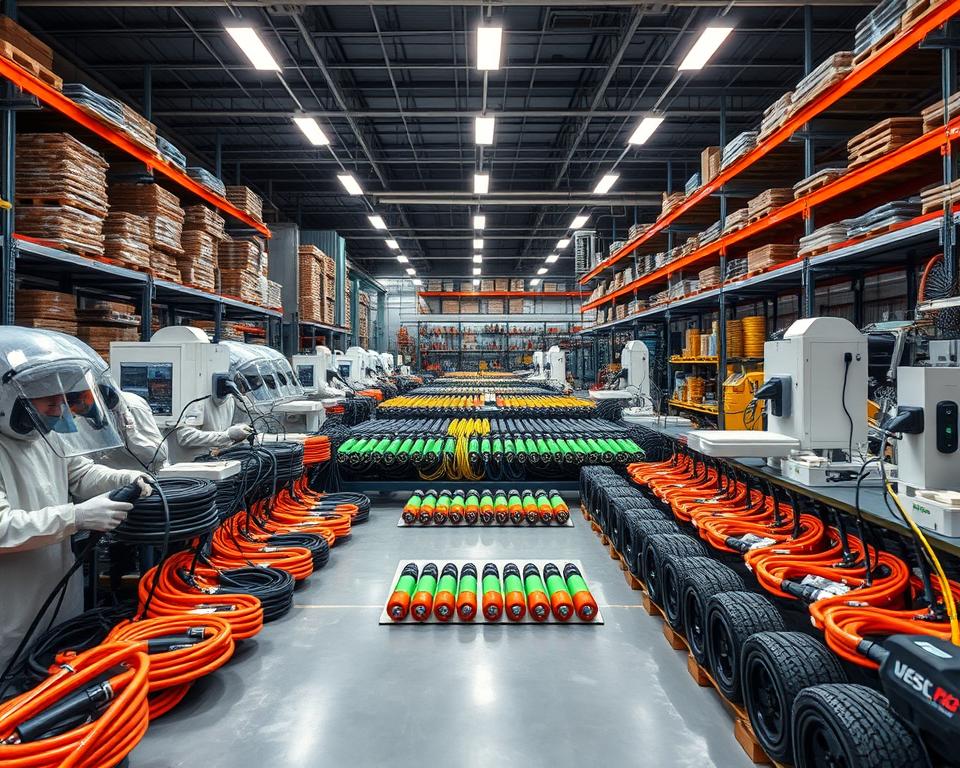
The Role of EV Charging Cables in Home Energy Management

Leading EV Charging Cable Manufacturers for Your EV

EV adoption is booming, with the demand for dependable and efficient charging solutions growing exponentially. As of now, industry leaders have been at the cutting edge of this change, providing high-quality charging infrastructure. Southwire, for instance, has been a significant player since 2014, boasting over 1000 five-star reviews and 75 years of experience in the electrical construction industry.

The upswing in electric vehicle adoption creates a requirement for long-lasting, quick, and safe Charger Manufacturers in China. Key suppliers are developing to address changing requirements, offering products that boost the overall charging experience.

Understanding the distinctions between various charging solutions is crucial for selecting wisely. Quality charging infrastructure directly impacts vehicle performance and user experience.

Critical Findings

  • Top manufacturers offer high-quality charging cables for improved durability and safety.
  • The demand for efficient charging infrastructure is on the rise with the growth of the electric vehicle market.
  • Top brands pioneer solutions for changing EV requirements.
  • High-grade cables improve energy transfer and driving range.
  • Opting for top-tier cables yields future savings.

EV Charger Manufacturers

Why High-Quality EV Cables Matter

As electric vehicles become increasingly popular, the significance of top-grade EV charging cables is undeniable. The efficiency, safety, and dependability of electric vehicle charging systems rest on the quality of the charging cables used.

Advancements in EV Charging

Electric vehicle charging technology has undergone significant advancements in recent years, with a priority on faster charging speeds and enhanced protections. Modern EV charging cables are built for these requirements, incorporating high-grade materials and advanced designs to minimize power loss and maximize transfer rates.

The Case for Premium Charging Infrastructure

High-grade cables ensure reliable, safe charging. Robustness, such as all-weather performance and temperature tolerance, ensure reliable operation across various environments. Additionally, meeting standards and adherence to industry guidelines are essential in ensuring that cables meet rigorous safety requirements.

Key Features Benefits
High-grade build quality Reduced energy waste
Enhanced durability features All-weather reliability
Standards adherence Rigorous safety requirements met
Serviceability Repairable design for longevity

Aichie Tech Electronics’ premium cables undergo rigorous testing at The Cable Lab. With repairable Portable EV Charger Manufacturer, owners save money long-term through repairs, reducing waste and protecting the planet.

Top EV Charging Cable Manufacturers in China

China is home to a growing number of EV charging cable manufacturers. They play a key role in global EV infrastructure, providing high-quality automotive cables designed for various charging needs.

Wottz – Pioneers in EV Cables Since 2014

Wottz has established itself as a prominent player in the EV charging cable market since 2014. They offer a range of cables that cover Mode 1–4 charging standards, from Mode 1, 2, 3, and fast-charging Mode 4 DC Charging.

Aichie Tech Electronics: 75+ Years of Electrical Expertise

Aichie Tech Electronics’ seven-decade legacy informs its premium cable designs. Their products are designed to meet the demands of both domestic and commercial EV charging infrastructure.

Additional Key Cable Suppliers

Beyond industry leaders like Wottz and Southwire, other manufacturers are making their mark by focusing on specific automotive applications or technological innovations in electric vehicle charging. These include Type 1 & 2 connector experts, as well as brands innovating in cable durability and adaptability.

Understanding Different Types of EV Charging Cables

As electric vehicles become increasingly popular, understanding the various types of EV Charging Cable Manufacturers is crucial for optimal charging experiences. Different cables suit different charging needs. The variety in EV charging infrastructure demands a closer look at the different cable types available.

Comparing SAE J1772 and Mennekes Cables

Type1 and Type2 charging cables are two common standards used for EV charging. Type 1, also known as SAE J1772, is North American standard, while Type 2, or Mennekes, is the standard in Europe. The right cable matches your car and charger. Type 2 cables often handle greater power, making them ideal for speed.

Level 2 & Fast DC Cables

Level2 charging cables offer faster charging than Level1, using 240V AC power to deliver up to 19.2 kW of power. DC Fast Charging cables, on the other hand, provide rapid charging by converting AC power to DC within the charging station, delivering rapid fill-ups. These cables are essential for long-distance EV travel, letting EVs charge in minutes.

Portable vs Fixed Cables

Portable EV charging cables, such as “Granny chargers,” offer flexibility by allowing owners to charge their vehicles from standard household outlets. Tethered cables are fixed to charging stations, offering ease at the cost of portability. The choice comes down to flexibility vs convenience.

When selecting an EV charging cable, factors such as cable length, charging speed, and compatibility with the vehicle are crucial. For instance, portable charging cables range from simple L1 cords to full L2 kits. Vehicle-to-load (V2L) cables represent an emerging category, enabling EVs to power external devices.

  • Portable charging cables offer flexibility, with options ranging from basic to more robust Level2 solutions.
  • Tethered cables are permanently attached to charging stations, limiting flexibility but eliminating the need for personal cables.
  • Cable length is a critical consideration, with options ranging from 5-meter standard cables to 50-meter extended cables.

Essential EV Cable Characteristics

High-quality EV charging cables are distinguished by several key features that ensure reliable and safe charging. These features are crucial for maintaining the integrity of the charging process and safeguarding the vehicle and user.

Durability and Weather Resistance

Cables must withstand rain, sun, and cold. Manufacturers like Wottz and Southwire use RoHS-compliant recyclable compounds, ensuring they withstand various environmental conditions. Their serviceable design facilitates easy maintenance and promotes recycling.

Flexibility and Ease of Use

Cables need to flex yet remain tough. High-quality EV charging cables are designed to be flexible, making them easier to handle and maneuver. This flexibility does not compromise their durability, as they are built to withstand regular use.

Regulatory Approvals

Approved safety marks ensure reliable performance. They ensure their products meet or exceed standards such as IEC62196 for connectors and UL2594 in North America. Rigorous third-party testing evaluates electrical safety, mechanical durability, and environmental resistance.

Certification Description Region
IEC62196 Connector safety standards International
UL2594 Standard for electric vehicle supply equipment North America
ROHS Restriction of hazardous substances International

Emphasizing these attributes yields cables that are safe, durable, and user-friendly.

Innovative Technologies from Leading EV Charging Cable Manufacturers

New cable tech is transforming EV charging, with a focus on ultra-fast charging, improved signal integrity, and eco-friendly materials.

Thermal-Managed Fast Charging

Liquid-cooled charging cables are emerging as a key technology for ultra-fast charging, minimizing thermal throttling during high-power sessions.

Hyperboloid Contacts and Enhanced Signal Integrity

Hyperboloid contacts are being integrated into EV charging cables to enhance signal integrity, ensuring stable communication and power flow.

Green Charging Cable Designs

Leading manufacturers are prioritizing sustainability in their cable designs, using recyclable materials and eco-friendly compounds that reduce environmental impact. For instance, companies like Aichie Tech Electronics and Wottz are embracing repairable designs and strict standards to foster reuse.

The industry’s shift towards sustainability includes the use of TPU jackets, avoidance of hazardous substances, and the development of take-back programs for end-of-life disassembly and material recovery.

Buyer’s Guide to EV Charging Cables

Choosing the right EV charging cable is crucial for efficient and safe charging. To make an informed decision, consider several key factors.

Connector Compatibility

Verify your car’s inlet and cable plug match. Your vehicle’s onboard charger capacity determines the maximum AC charging rate it can accept.

Determining the Optimal Cable Length

Choose a cable length that suits your charging needs. A longer cable provides more flexibility but may be heavier and less manageable.

Power Rating & Charge Rate

Match your cable’s power handling to your vehicle’s capabilities. Standard Level 2 home charging operates at 7.2 kW, but some vehicles support up to 19.2 kW with appropriate electrical service.

By considering these factors, you can select an EV charging cable that meets your needs and enhances your overall charging experience.

Conclusion: Investing in Quality EV Charging Infrastructure

As the electric vehicle market continues to expand, the importance of quality charging infrastructure cannot be overstated. Choosing cables from Wottz or Aichie Tech Electronics provides long-term value and reliability. Their serviceable designs enable repairs over replacements to cut waste. This approach aligns with the core values of electric vehicle ownership by promoting sustainability.

Selecting top-grade infrastructure prepares you for next-gen charging.

Transfer Molds for Medical Devices: Dallas Expertise in Action

Expert Industrial Machining Services in Dallas

Were you aware that precise machining can attain tolerances of +/- 0.003 inches? This ability is essential in the current fabrication landscape. As Dallas’s foremost CNC machine shop, Lowrance Machine delivers custom mold building services Dallas answers. These offerings are designed to satisfy the varied needs of markets with unparalleled accuracy and excellence.

Sheet metal working’s approval rates frequently surpass 99%. This reveals the trust in precisely executed machining offerings. In the quickly expanding production landscape of Dallas, Lowrance Machine is poised to aid your functions. We employ the most recent technology and skilled technique to boost your venture.

What Constitute Industrial Machining Solutions?

Industrial machining solutions encompass multiple processes forming and refining components. They utilize state-of-the-art technologies such as CNC and manual machining. These processes are essential for enhancing product standards and diminishing waste. Understanding their importance highlights their indispensable role in production.

Explanation and Significance

These solutions make use of specialized tools to create precise forms and dimensions. CNC machining employs computer-controlled machines for superior accuracy. Traditional machining, however needs proficient craftsmen with hand-operated tools for tailored projects. These offerings enhance effectiveness, simplify production, and uphold high-quality benchmarks.

Applications Across Multiple Sectors

Industrial machining offerings are critical across various sectors. Below are some fields that depend on these offerings:

  • Oil and Gas
  • Aerospace
  • Automotive
  • Medical
  • Heavy Equipment
  • Military
  • Food and Beverage
  • Automation
  • Commercial sectors

These industries benefit from customized machining solutions. Such versatility enhances production and fulfills multiple requirements efficiently.

Why Choose Dallas for Machining Services?

The venue of your machining services can substantially impact both productivity and excellence. Dallas stands out as a top selection due to its tactical setting. Being centrally located improves Dallas’ logistics, assisting in speedy distribution nationwide. This connectivity streamlines procurement of materials and speeds up product delivery.

Prime Locale for Efficient Logistics

Dallas’s strategic locale enhances not only regional logistics but also aids diverse sectors. Its nearness to major highways, airports, and rail systems guarantees smooth operations for your machining requirements. This network cuts down on transit times and costs, providing your enterprise an advantage. Thus, you achieve faster delivery times without diminishing quality.

Robust Industrial Network and Resources

With a sturdy industrial infrastructure, Dallas hosts premier suppliers and manufacturing establishments. Prominent CNC shop, such as Owens Industries and QT Manufacturing, provide accurate components for sectors such as automotive and aerospace. This collection of knowledge secures access to superior materials and assets, satisfying your specific demands.

Profile of Lowrance Machine

Lowrance Machine remains a prominent player in the machining realm since 1964. Over more than years, it has transformed under the leadership of three generations. Presently, Chris and Matt Lowrance direct the company, cherishing their family’s commitment to excellence and innovation. They strive to deliver first-rate industrial machining solutions, prioritizing customer satisfaction and cutting-edge technology.

Company Background and Purpose

In Dallas, Lowrance Machine has earned praise for its custom metal molds and components. It proudly holds an ISO 9001-2008 certification, underscoring its dedication to worldwide quality standards. The company’s emphasis on continuous improvement is evident as they monitor pricing, quality, and delivery metrics. This strategy cultivates enduring client relationships by steadily meeting their needs.

Facilities and Equipment On Hand

Lowrance Machine’s premises are furnished with the latest machining tools. The Dallas machine shop is equipped with CNC machines that allow exact and streamlined manufacturing. Beyond CNC machining, they provide manual machining and bespoke mold building. Their expertise covers rubber molds and unique fasteners, proving their versatility. With plans to enhance and expand, they aim to further enhance their services.

1

Types of Machining Services Provided

Lowrance Machine delivers a spectrum of machining offerings for diverse industrial needs. Their selection includes CNC machining Dallas, recognized for precision, as well as manual machining for special requirements. Each offering provides merits and particular applications. This segment highlights how they fulfill distinct objectives.

Computer Numerical Control Machining and Its Advantages

CNC machining is recognized for its accurate output and rapid production. It’s suited for substantial precise parts. Its automated system attains complex shapes and stringent tolerances, essential in aerospace and automotive industries. With 3-axis and 5-axis milling, most projects are completed within 7-10 days.

Attribute Specifications
Maximum Part Size (3-axis milling) 2000 x 1700 x 1000 mm (78.74 x 66.93 x 39.37 in)
Minimum Part Size (3-axis milling) 5 x 5 x 5 mm (0.2 x 0.2 x 0.2 in)
Metal Tolerance +/- 0.13 mm (+/- 0.005 in)
Plastic Tolerance +/- 0.20 mm (+/- 0.008 in)
Production Time for 20 Components 10 days

Manual Machining and Bespoke Offerings

Hand-operated machining services in Dallas are crucial for bespoke and distinctive projects. They are important for creating bespoke molds in Dallas or specific parts. Skilled workers and advanced machines enable elaborate designs and changes not achievable with CNC. Healthcare and defense sectors utilize manual machining for their specific demands, making sure products operate flawlessly and consistently.

Skilled Industrial Machining Offerings Dallas

In the industrial machining realm, precision and quality are fundamental to success. Lowrance Machine, a front-runner in precision machining Dallas, upholds stringent standards for top-notch deliverables. They possess decades of expertise and a team dedicated to thorough quality assurance. This ensures that each project accurately meets customer specifications, delivering consistency in production.

Exactness and Quality Assurance Standards

Lowrance Machine adheres to comprehensive quality assurance procedures, ensuring premium machining services. They leverage cutting-edge inspection procedures and stringent testing to fulfill industry benchmarks. Routine machine calibration and a 100% HVAC-supported pristine environment highlight their devotion. Consequently, Lowrance provides trustworthy products across industries such as aerospace and telecommunications.

Fast Turnaround Times

Understanding the significance of quickness in today’s market, Lowrance Machine prioritizes rapid production without diminishing quality. They utilize critical equipment to finalize projects rapidly, maintaining precision. With immediate quotes, they support customers in rapid decision-making. Their short lead times accelerate projects, boosting operational efficiency. This swift service makes Lowrance a solid partner for businesses seeking to keep production on track.

Tailored Machining Offerings

Lowrance Machine specializes in delivering machining solutions tailored to various industry needs. Their emphasis on exactness ensures that services such as bespoke mold construction in Dallas and manufacturing of custom fasteners are first-rate. Clients are confident that their specific requirements are satisfied with outstanding results.

Bespoke Mold Construction Services

Lowrance Machine employs advanced techniques and up-to-date tools to deliver outstanding custom mold building services in Dallas. They supply a variety of molds, including rubber molds in Dallas, injection molds, and compression molds, constructed with detailed attention. The team partners with clients to grasp their needs, ensuring molds that not only comply with industry standards but are also economical and enduring.

Custom Fasteners and Elements

Lowrance Machine is known for its capacity to produce custom fasteners and components. By leveraging state-of-the-art technology, the company specializes in producing custom fasteners crafted to precise specifications. Whether you require standard fasteners or intricate components, Lowrance Machine’s focus to quality and tailoring distinguishes it. This promise ensures that all products comply with rigorous performance standards, ensuring reliability for your projects.

Type of Service Characteristics Applications
Bespoke Mold Construction Exact molds, tailored designs, durable materials Aeronautics, automotive, retail goods
Bespoke Fasteners Custom specifications, rapid prototyping, premium materials manufacturing equipment, electronic devices, construction

Industries Served by Lowrance Machine

Lowrance Machine supports a variety of industries, playing essential roles to satisfy specific needs. The oil and gas industry, noted for its need for precision components, demonstrates the crucial role of industrial machining. These components are crucial to operational efficiency in this sector. The aerospace and defense sectors also depend on machining services. They demand rigorous quality and regulatory standards, showcasing Lowrance Machine’s commitment to quality.

Petroleum & Energy Sector Needs

The oil and gas industry needs premium, resilient parts to tolerate severe conditions. Specializing in industrial machining, Lowrance Machine produces parts that comply with rigorous industry standards. It fabricates piping components and complex structural pieces where precision is crucial. Sophisticated CNC machining technologies are employed, minimizing material waste and guaranteeing cost-effectiveness in addition to quality.

Aeronautics and Military Manufacturing

Aerospace machining at Lowrance Machine emphasizes regulatory compliance, including ISO 9001 and AS9100 certifications. Meeting these standards instills clients with assurance in rigorous quality and safety standards. In the defense industry, machining precision is of utmost importance for components to perform under severe conditions. Utilizing advanced 5-axis machining, Lowrance Machine ensures exceptional accuracy for critical aerospace uses.

Field Primary Offerings Standards
Oil and Gas Precision components, bespoke production ISO 9001
Aeronautics Complex components, strict quality assurance AS9100D, ISO 9001
Military High-precision parts, military specifications ISO 9001

Lowrance Machine remains dedicated to supporting the oil and gas, aerospace, and defense fields with customized machining offerings. It maintains superior standards and reliable performance across these areas. This focus underscores the vital role of industrial machining in the current manufacturing arena.

Benefits of Choosing Lowrance Machine

Choosing a machining ally like Lowrance Machine yields significant benefits to your activities. They offer affordable pricing in Dallas, facilitating budget-friendly solutions. This efficiency helps you in utilizing your budget wisely. Moreover, their broad range of machining options addresses various needs, from sample models to large-scale production.

Affordable Rates and Adaptable Choices

Lowrance Machine emphasizes competitive pricing without compromising quality. Their competitive rates appeal to various businesses, assisting them manage resources efficiently. With machining options that align to your project needs, you can quickly respond to market fluctuations. This focus on client satisfaction reinforces partnerships and enhances your overall experience.

Immediate Quotations and Rapid Turnaround

In the quick-paced world of manufacturing, obtaining prompt quotes is vital. Lowrance Machine ensures immediate quotes, aiding swift decision-making. Their short lead times expedite projects, enhancing operational efficiency. This swift service establishes Lowrance a reliable partner for businesses aiming to keep production on course.

Expertise in Advanced Technology

Lowrance Machine is at the forefront of advanced machining technology. It harnesses state-of-the-art machinery and techniques for improvements in CNC lathe machining and milling. This approach increases precision and enhances production efficiency across projects.

CNC Lathe and Milling Capabilities

Lowrance Machine’s CNC lathe machining supplies significant benefits. It attains remarkable precision in component manufacturing for industries such as aerospace, automotive, and medical. Its capabilities include:

  • Shaping bodies of revolution
  • Forming external and internal threads
  • Drilling end holes and cutting off parts

This permits extensive customization to satisfy design needs with materials such as aluminum, brass, and titanium.

5 Axis Machining and Advantages

5 axis machining Dallas revolutionizes the machining industry. It allows the production of complex shapes with unparalleled precision. The advantages include:

  • Reduced setup times, for quicker production
  • Enhanced accuracy in detailed designs
  • Capability to work on various part facets in one setup

Lowrance Machine’s use of advanced technology guarantees quality, fast turnarounds, and the ability to meet a diverse array of project requirements.

The Final Word

The landscape of industrial machining in Dallas exhibits innovation and excellence through Lowrance Machine’s operations. This firm distinguishes itself by providing cutting-edge precision machining and modern CNC technology. Their proficiency in delivering top-notch solutions across industries including aerospace and oil and gas is remarkable.

Lowrance Machine excels by delivering swift completion times without sacrificing quality. Owing to CNC technology, they achieve steady, dependable outcomes. This not only cuts down on labor but also boosts production efficiency. Whether you seek small or bespoke parts, Lowrance Machine promises fulfilling your requirements to the best standard.

By selecting Lowrance Machine, you’re opting for a top-tier industrial machining partner in Dallas. They’re committed on customer satisfaction and rigorous quality standards. This makes them a prime choice for attaining your manufacturing objectives. Contact them to learn how their machining services can advantage your projects.